Patimania
A multi-sided marketplace for pet-hotel, grooming, and pet-taxi services in Türkiye. Payments sit in escrow via iyzico and are only released when the service is confirmed complete. Web + iOS + Android — solo build.
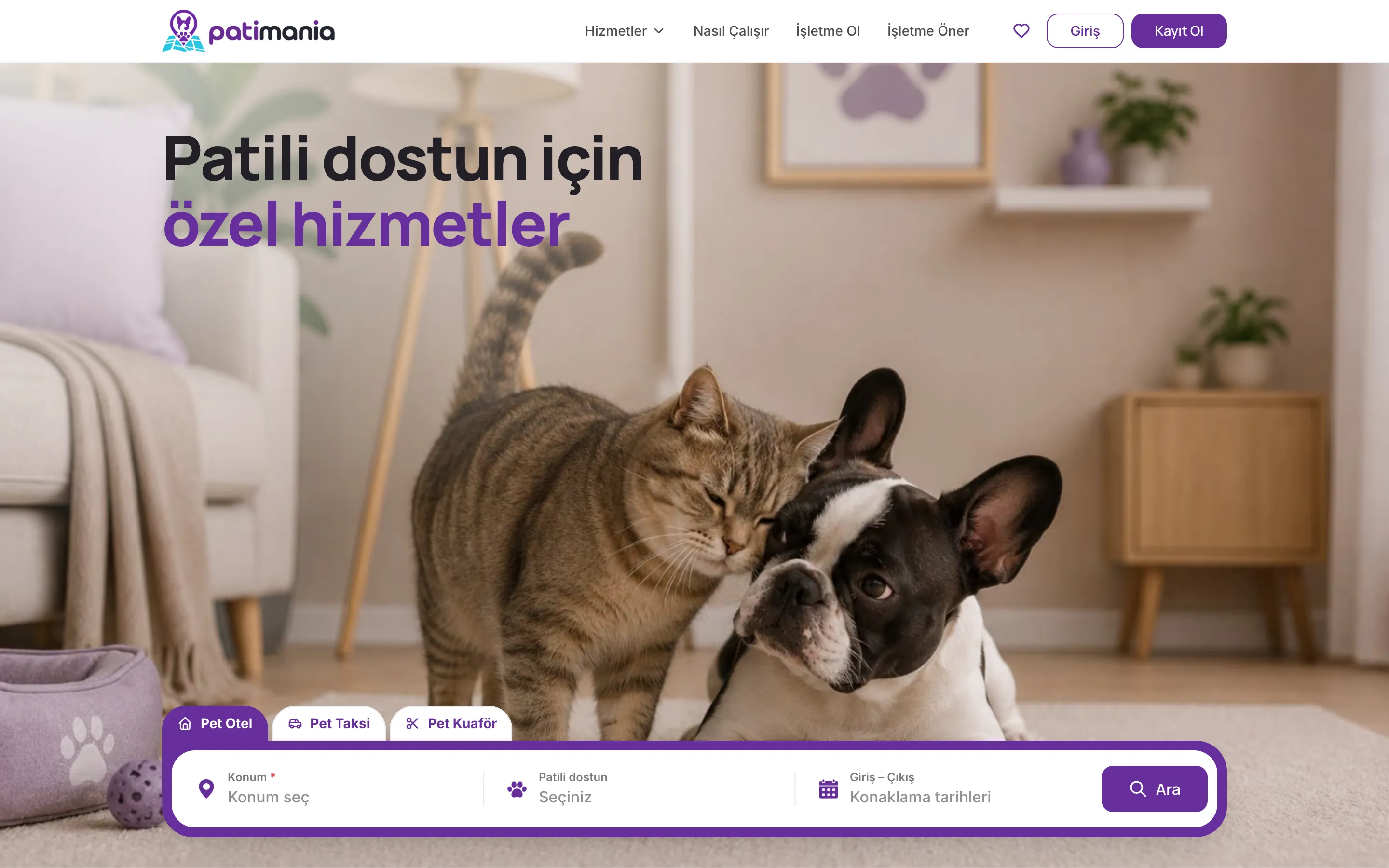
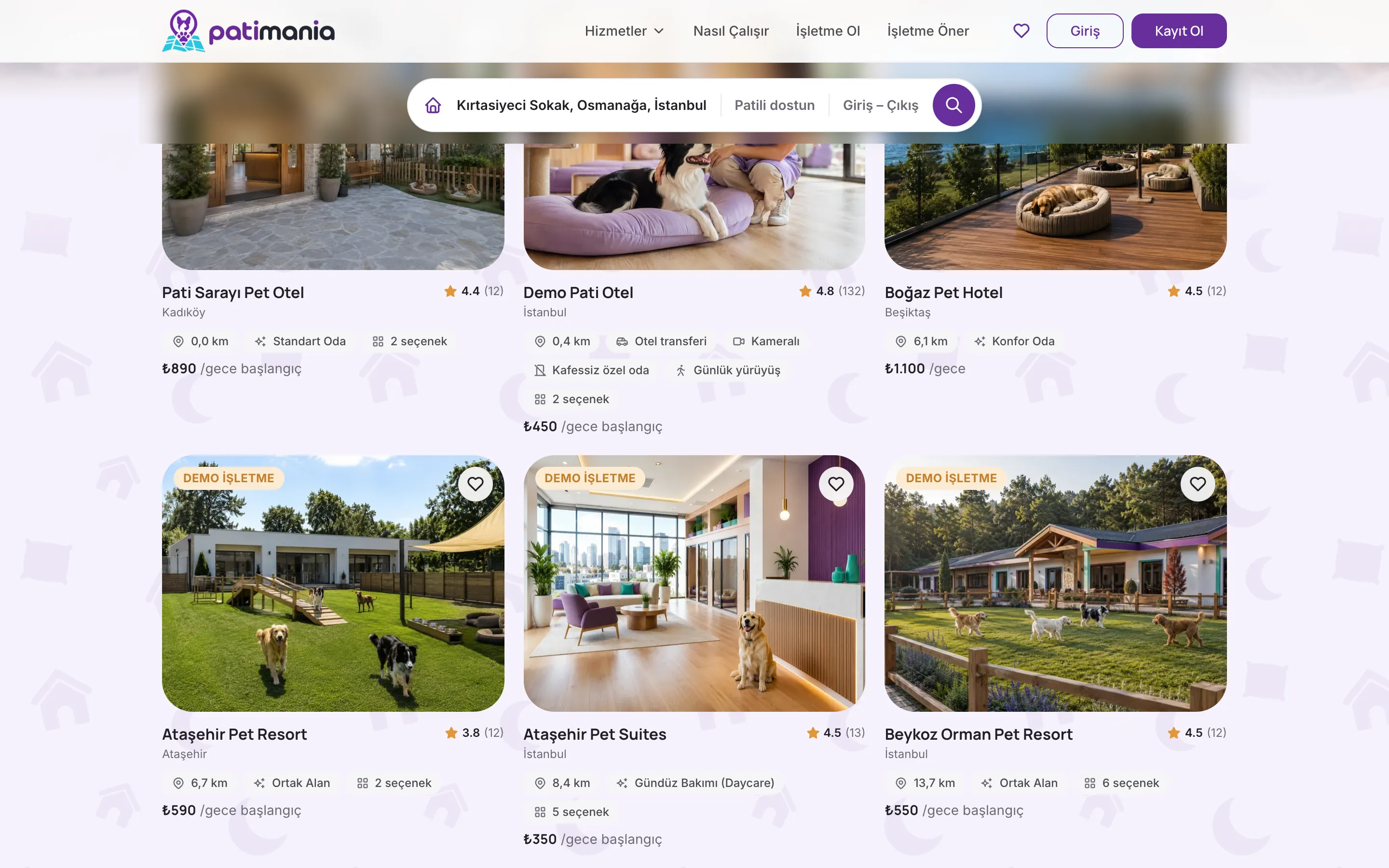
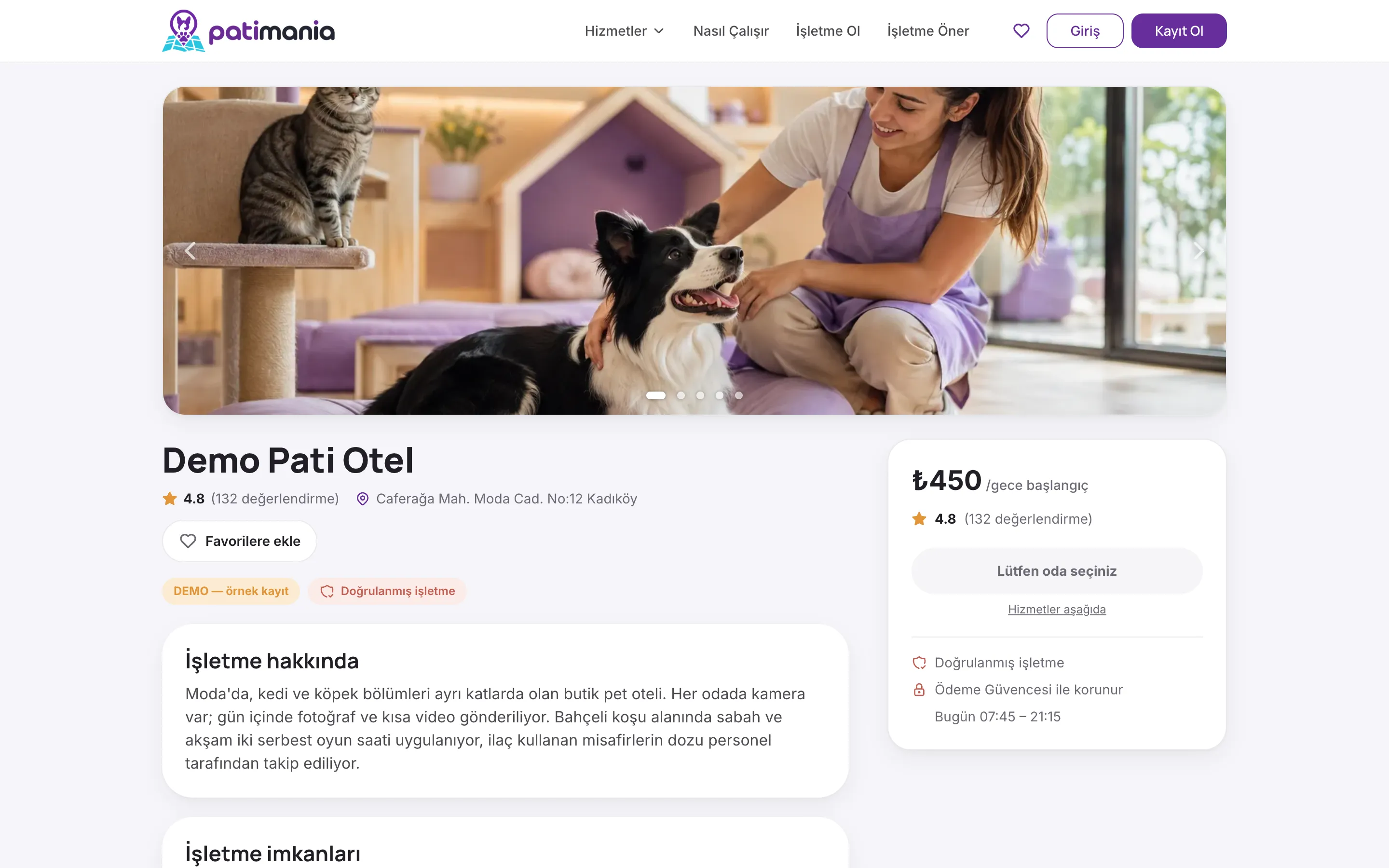
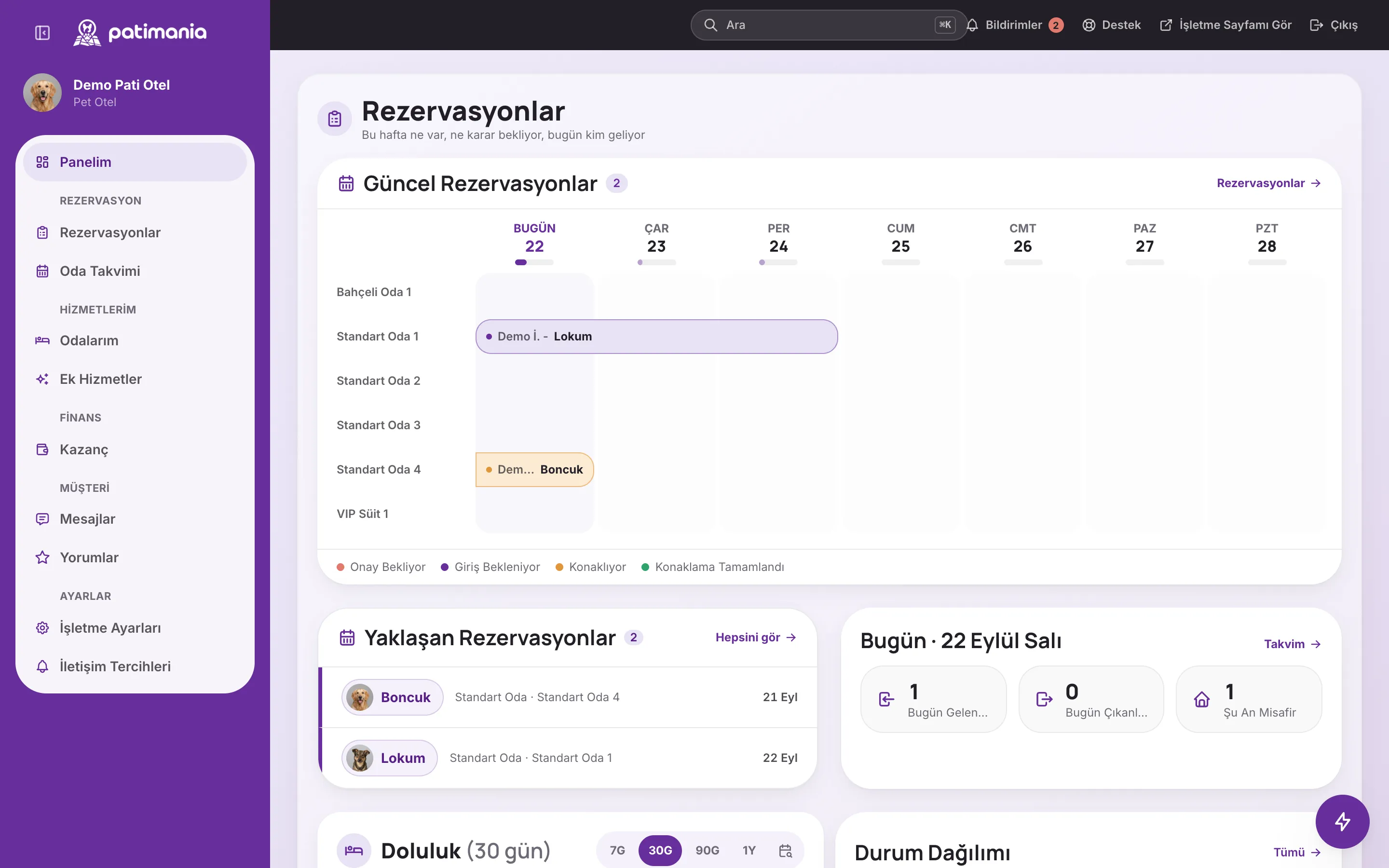
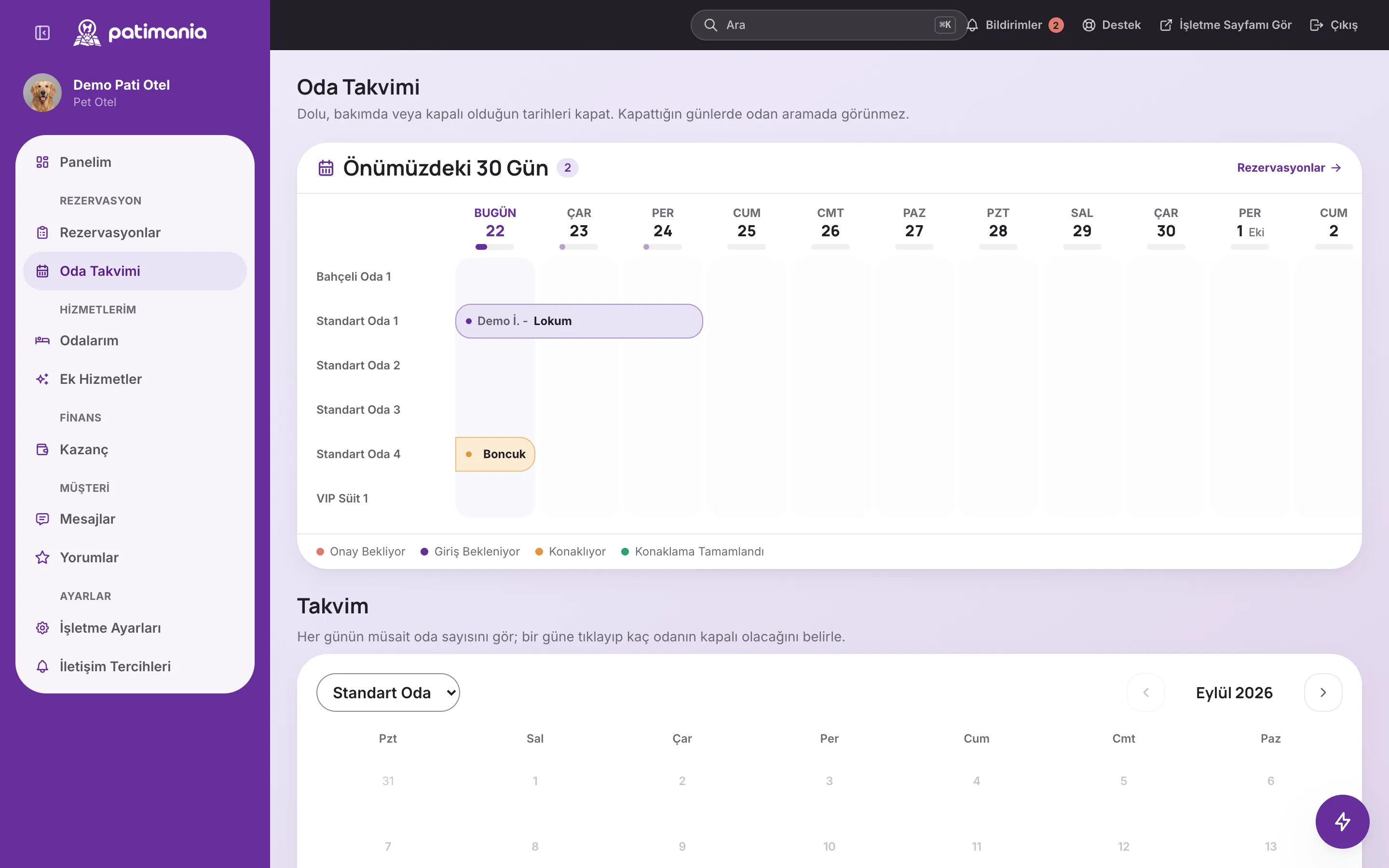
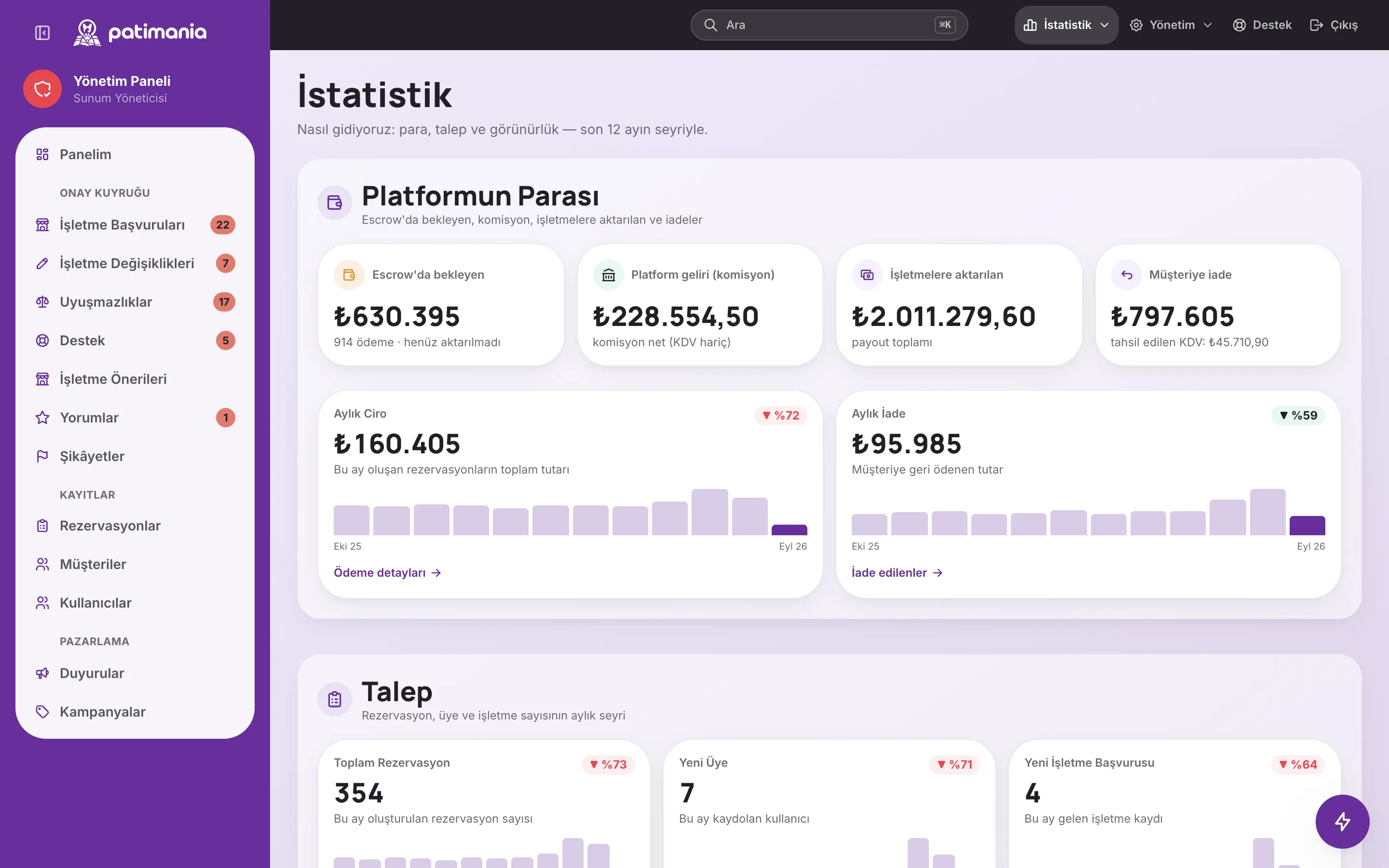
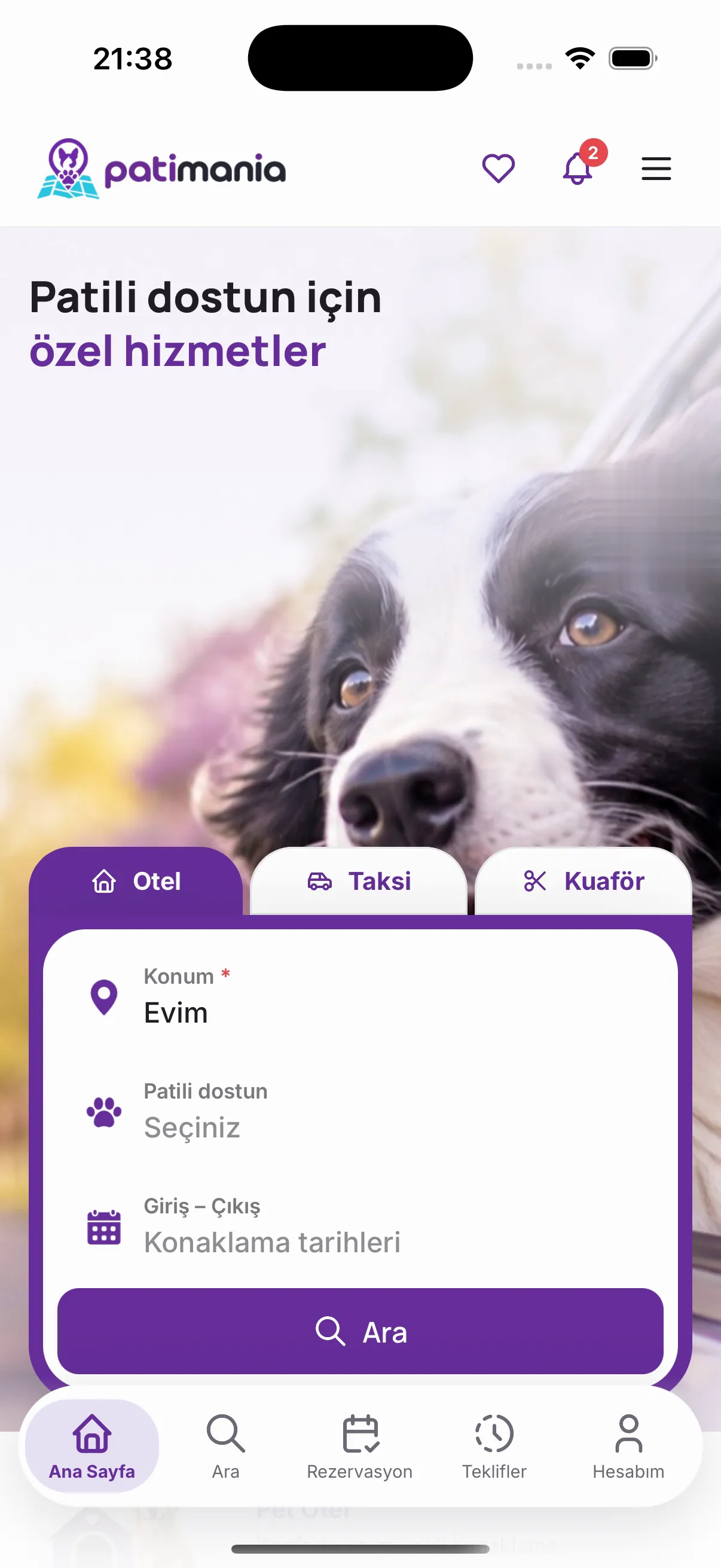
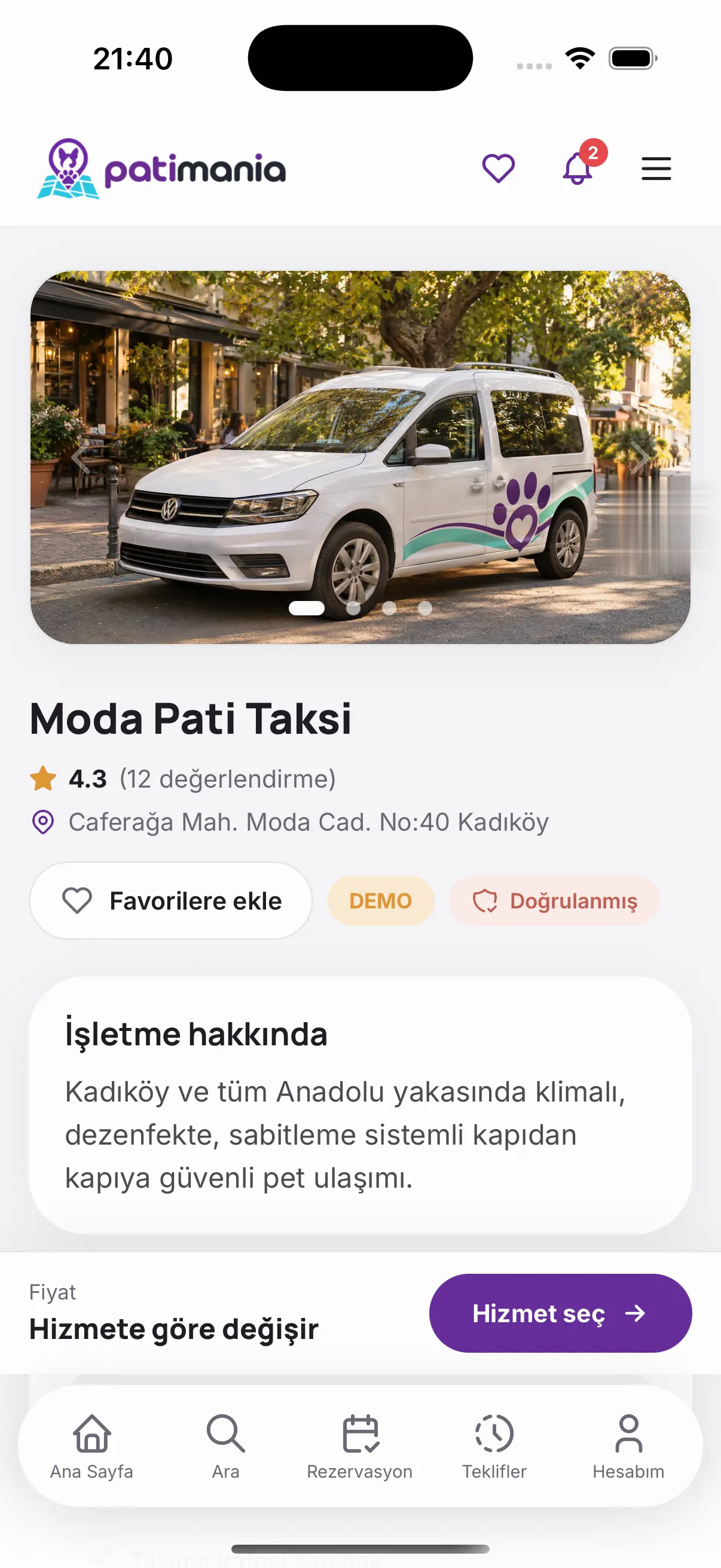
Patimania is a multi-sided marketplace for pet-hotel, grooming, and pet-taxi services in Türkiye. Payments sit in escrow via iyzico and are only released once the service is confirmed complete. I built the whole thing solo over three months — data model to devops, backend to mobile app — starting in July 2026. Web is live at patimania.com. Android is in Google Play closed testing; iOS is under App Store review.
Three months of work in numbers: ~1,500 commits, ~145k lines of TypeScript across four codebases, 52 database tables, 84 migrations, 37 end-to-end test suites (~1,090 checks) running against real Postgres + MinIO, and 129 distinct screens across web + iOS + Android.
Pieces I’m proud of
- Double-booking is a database-level impossibility. A PostgreSQL
EXCLUDEconstraint over(resource_id, tstzrange)usingbtree_gistrejects overlapping time ranges for the same room or vehicle. If two customers race for the same slot, one write wins at the database — the application can’t overbook even if the logic misbehaves. A 5–10 minute soft-hold sits on top for the payment window. - Backend-authoritative money + double-entry ledger. Prices, commissions, and release rules live server-side; the client can only propose. Behind the escrow flow is a double-entry ledger that tracks commission, business receivable, and VAT legs, with debit = credit invariants enforced on every write. Money fields are
numeric, neverfloat. - Status-changing writes are conditional. Approvals, cancellations, and refunds all run as
UPDATE ... WHERE status = 'pending'. I measured the unconditional version — two concurrent approve calls really did produce two accepted rows both reporting success. Now they can’t. - RBAC sentinels caught a real vulnerability. Admin endpoints are wired to per-user permissions, but forgetting a row opens access, not closes it. CI now fails the build if a new admin endpoint ships without a permission entry. That sentinel caught a live bug: support staff could resolve their own customer complaints solo.
- iOS ↔ Android parity harness. A three-layer setup — a ledger of platform-branches (CI fails if the count moves), a deep-link parity checker across
app.json/ AASA / route table, and an on-device diagnostic that turns visual regressions into numbers. A silent iOS deep-link outage got caught this way; plain smoke tests were both green.
Constraints on purpose
Hosted end-to-end in Türkiye on a Turkish VDS, no third-party CDN in front of the origin, so KVKK compliance stays boring instead of scary. Modular monolith — one repo, three deployables (api / web / mobile). First-party, cookieless visit logging with daily-rotated hashes and 3-decimal coordinate rounding, so businesses get “how many people viewed me” without a third-party analytics vendor in the path.
/// Screenshots